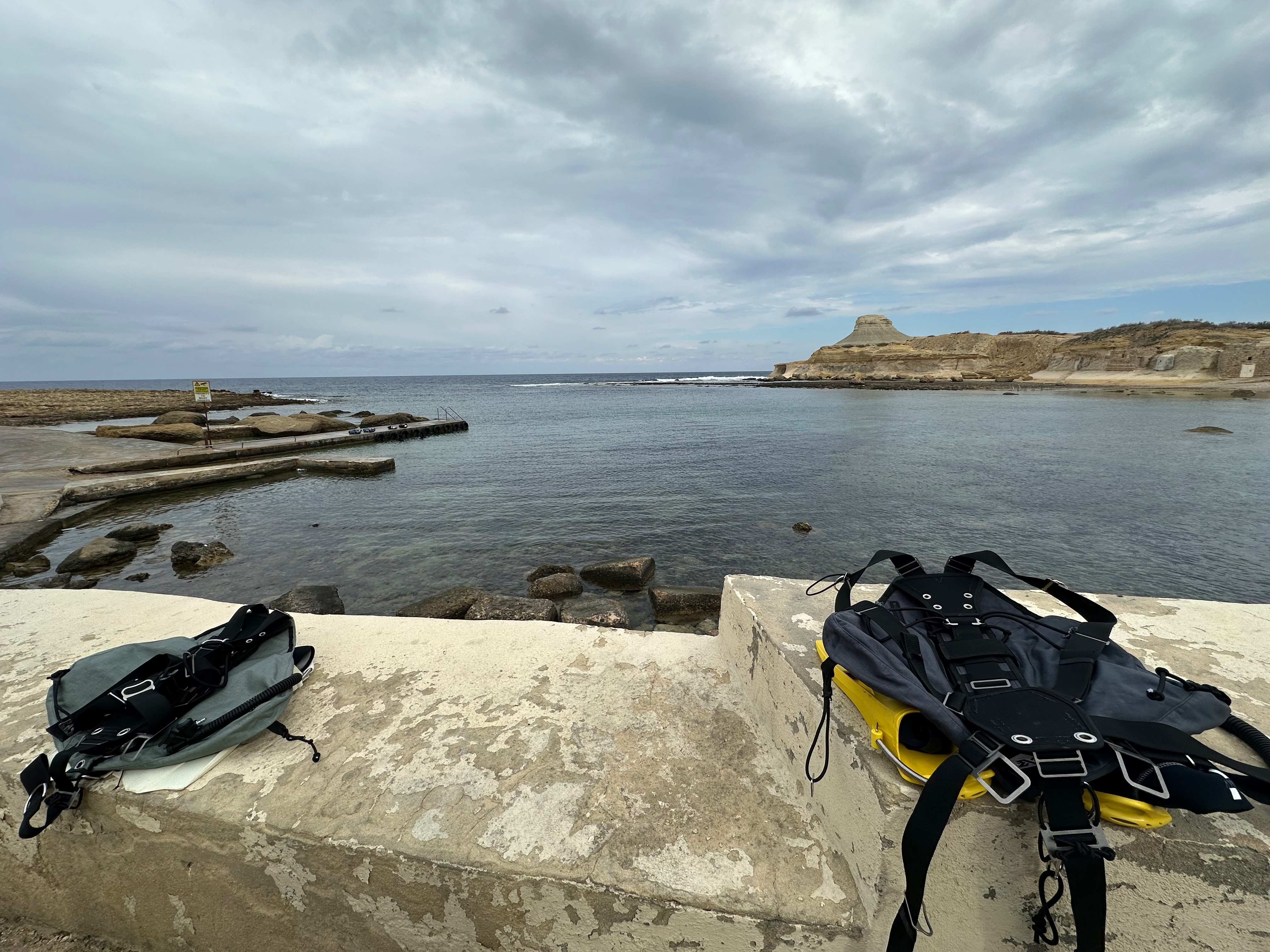
Sidemount Essentials course, part 1
Posted on November 1, 2024 • 5 minutes • 1027 words
Table of contents
Day 1, Becoming Sidemount diver
The day had finally arrived. After all the planning, emails, and anticipation, our Sidemount Essentials course was about to begin.
We had arrived in Gozo the evening before, and the next morning we were more than ready. Excited, curious, and probably just a little nervous, we met up with Vas to go through the plan for the day. At 9 a.m. we arrived at Atlantis Diving in Gozo, carrying suitcases full of equipment that was still more theory than practice to us.
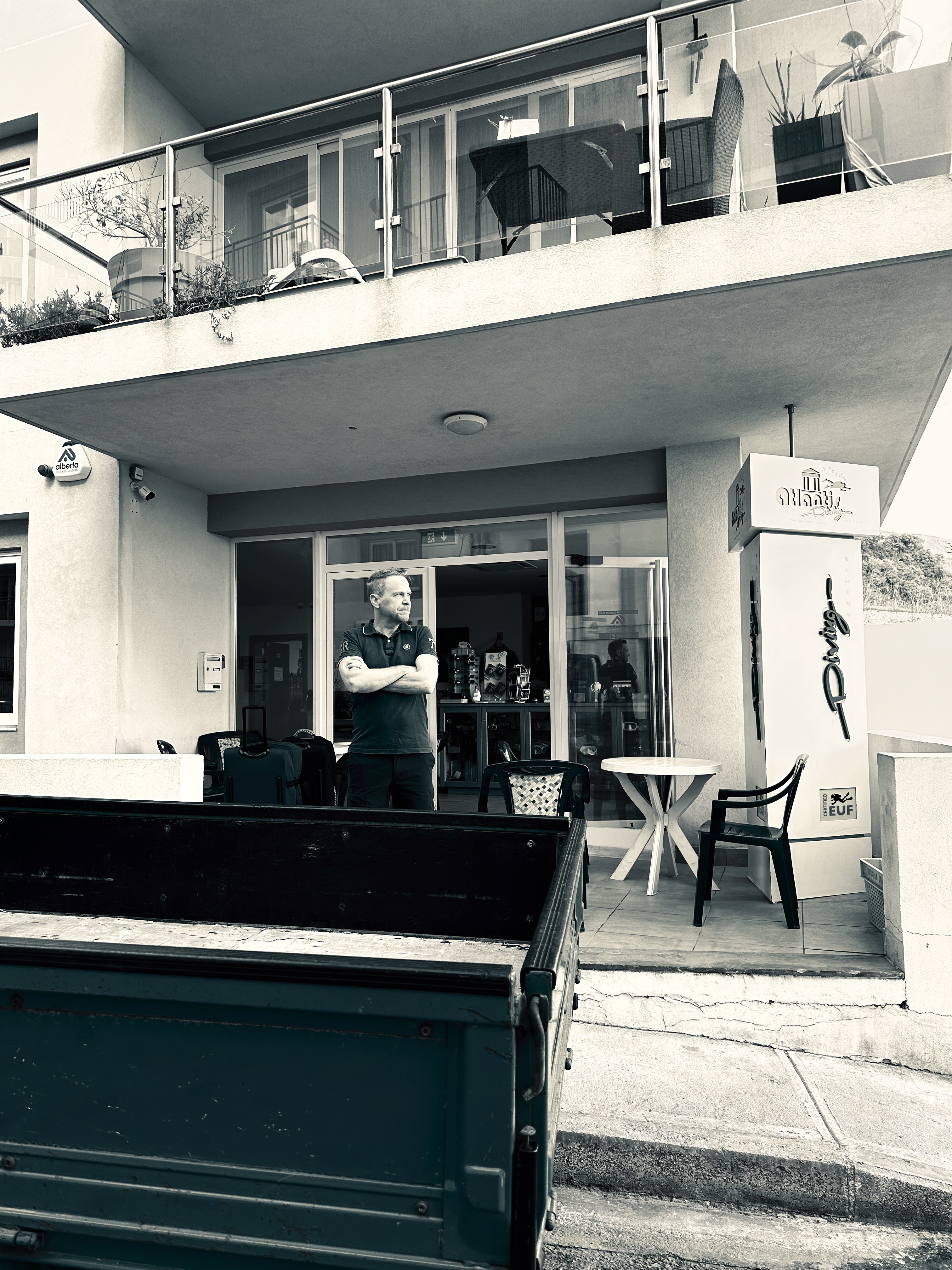
Among the shiny new toys was an XDeep Stealth TEC sidemount system. Up until then, it had been mostly an expensive collection of straps, bolts, and mysteries.
We started the day with a long equipment workshop. Vas carefully went through every piece of gear, explaining what it was for, how it should be configured, and why things were done in a particular way. He showed us how to measure and adjust the harness, where everything should be placed, and how to build a setup that actually fitted the diver wearing it.
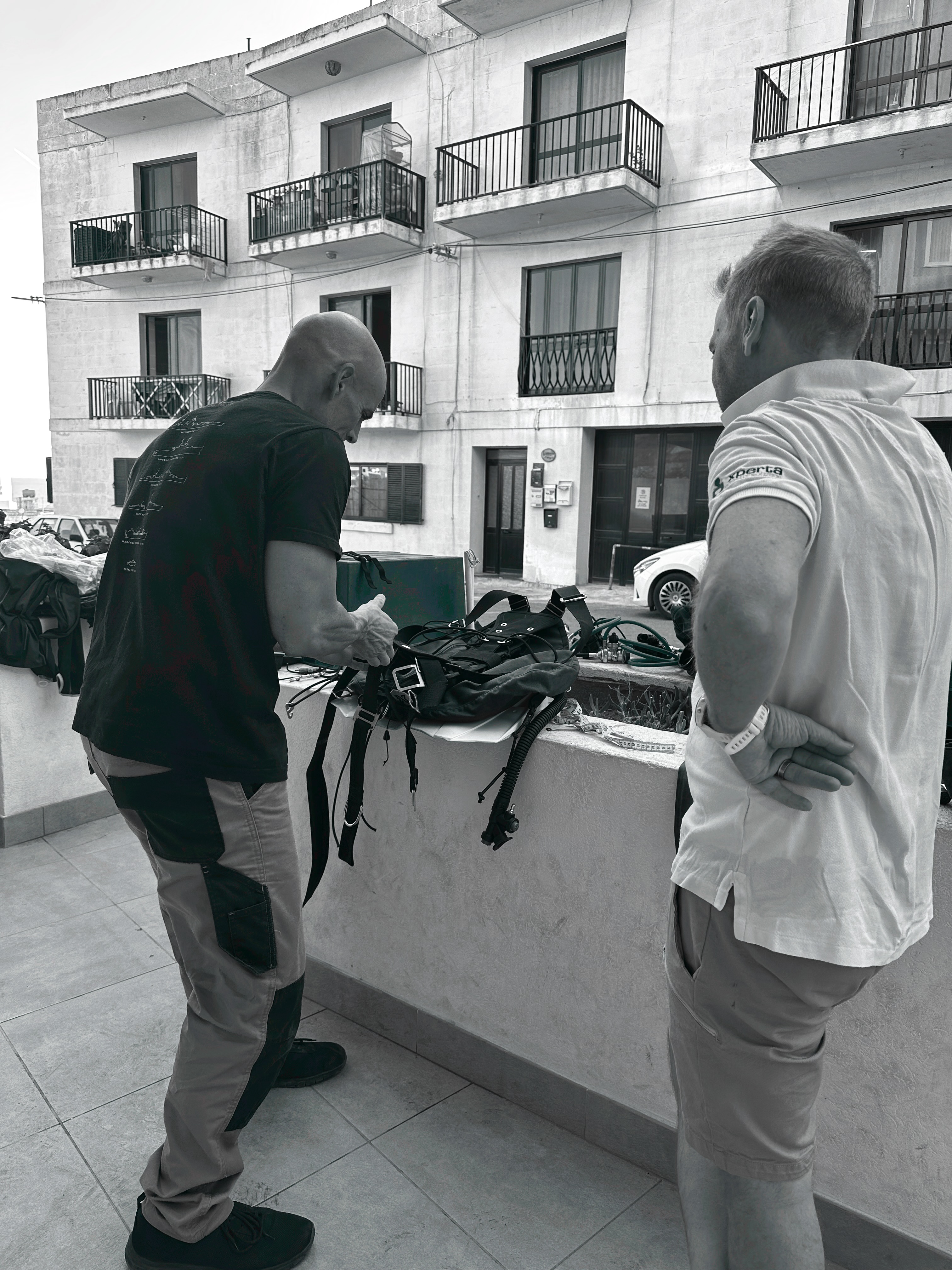
Looking back, it was clear that sidemount wasn’t simply a matter of clipping two cylinders to your sides and jumping into the water. There was quite a bit more thought behind it than that.
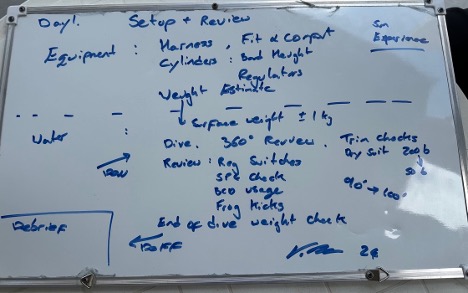
After the equipment workshop, we gathered around a table where Vas pulled out his trusted whiteboard. What followed was a detailed introduction to the philosophy and principles behind sidemount diving. He sketched equipment configurations, diving positions, and explained how everything was supposed to work together underwater.
With our heads full of new information and our gear finally adjusted, it was time for the part we had been waiting for: getting in the water.
We headed to Xwejni Bay for our first-ever sidemount dive.
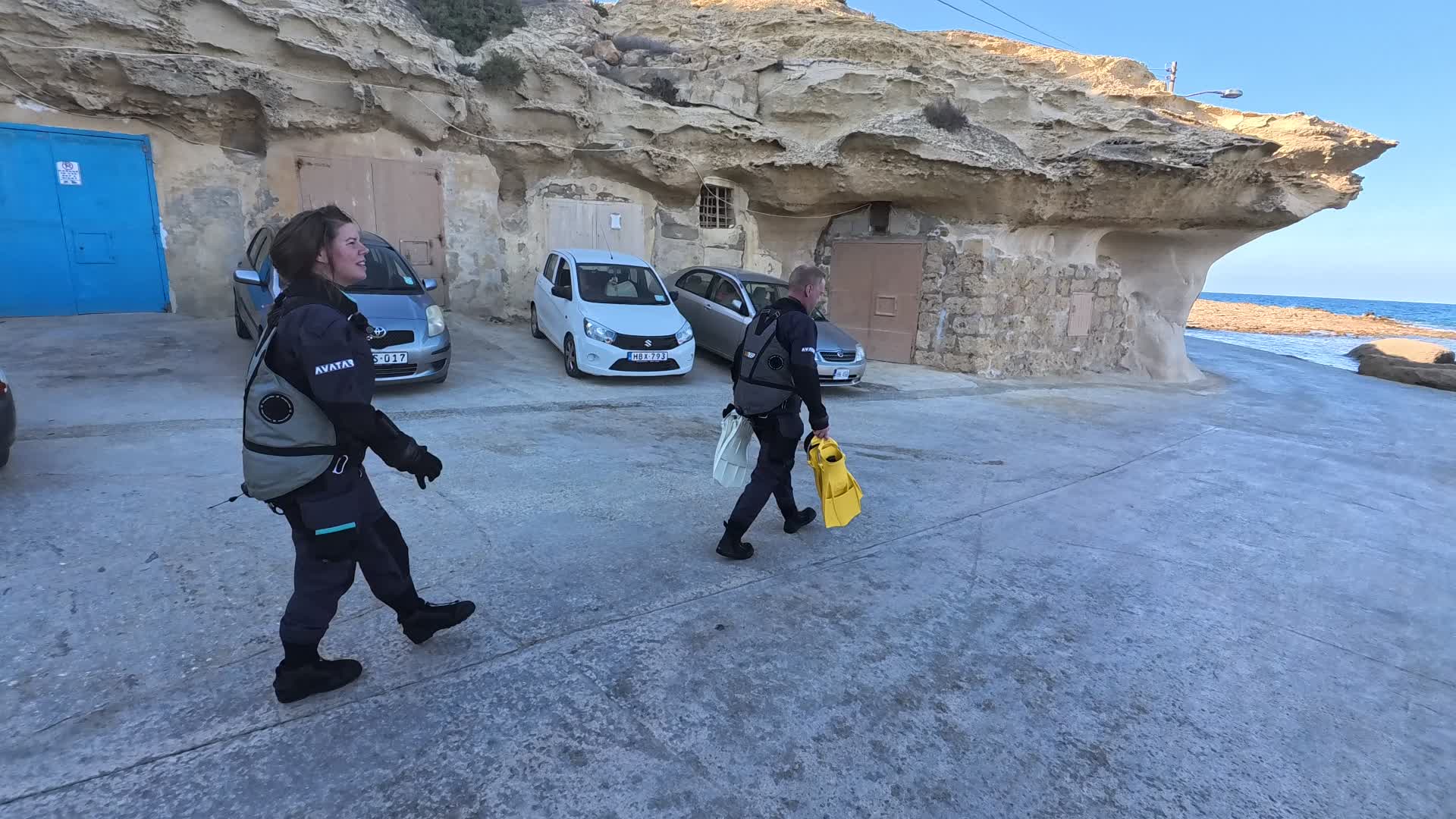
Before entering the water, Vas gave us one important piece of advice. For this first dive, we shouldn’t worry too much about perfect procedures or handling the cylinders flawlessly. The goal was simply to wear the equipment, move around, and start getting familiar with how everything felt.
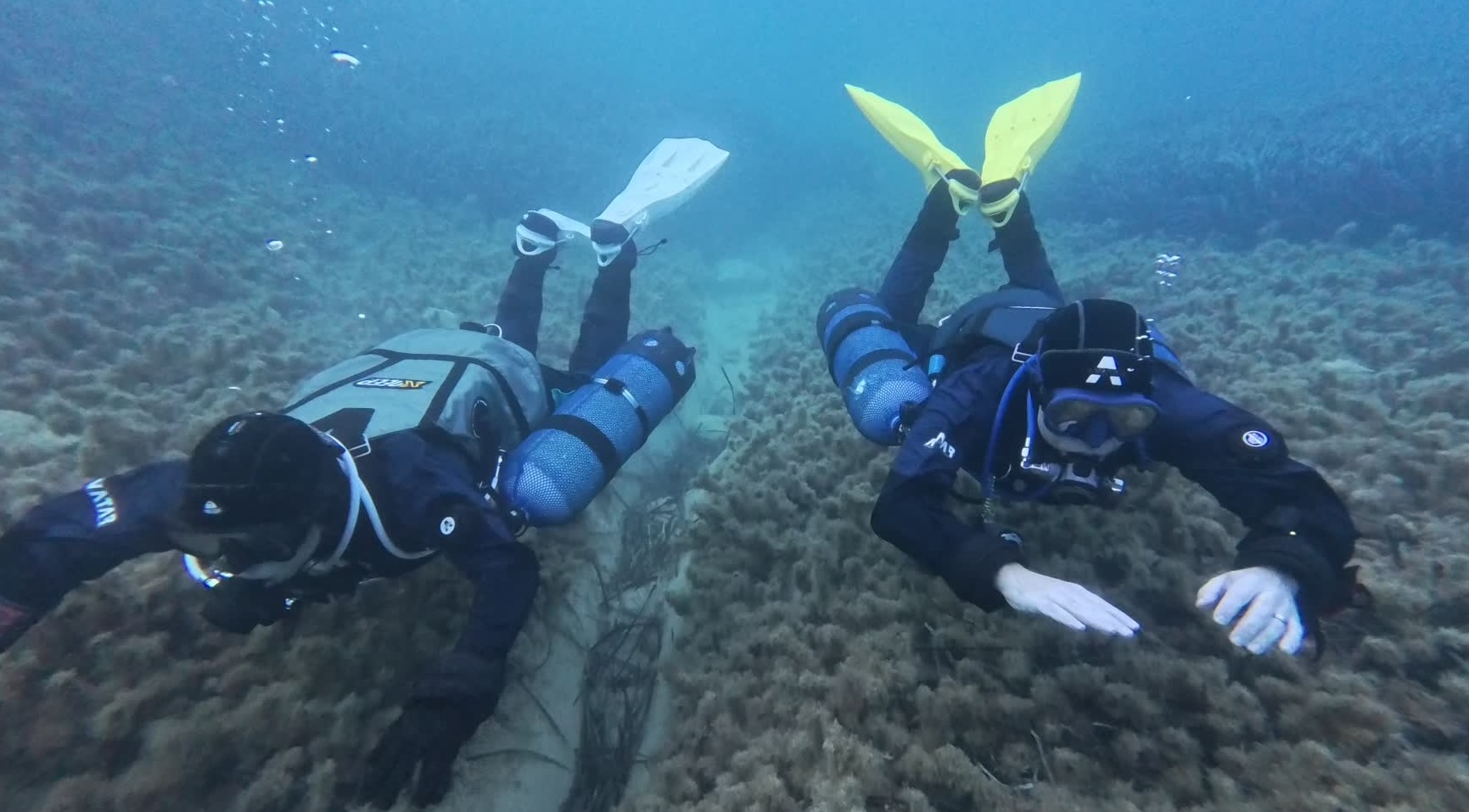
That sounded easy enough.
Then we entered the water.
From my dive log
“First lesson in sidemount with Vas. There is so much to say about this dive that can’t really be explained. It felt amazing.
At first, I was completely lost. The trim was difficult, everything felt different, and I wasn’t entirely sure where all my bits and pieces were supposed to be. But little by little we started making progress, and by the end of the dive things began to make sense.
The final trim check at around 5-6 metres went much better. Not perfect, but definitely progress.
One important lesson was learning that a proper trim check starts with an almost empty drysuit, using the wing to compensate for buoyancy. The goal is simply to relax and maintain the same natural position you would have during a normal dive.”
When I read those notes today, I can still remember exactly how it felt. Confusing, challenging, exciting, and incredibly fun all at the same time. It was only the first day, but already it felt like we had opened the door to a completely different way of diving.
Day 2, Reality Strikes
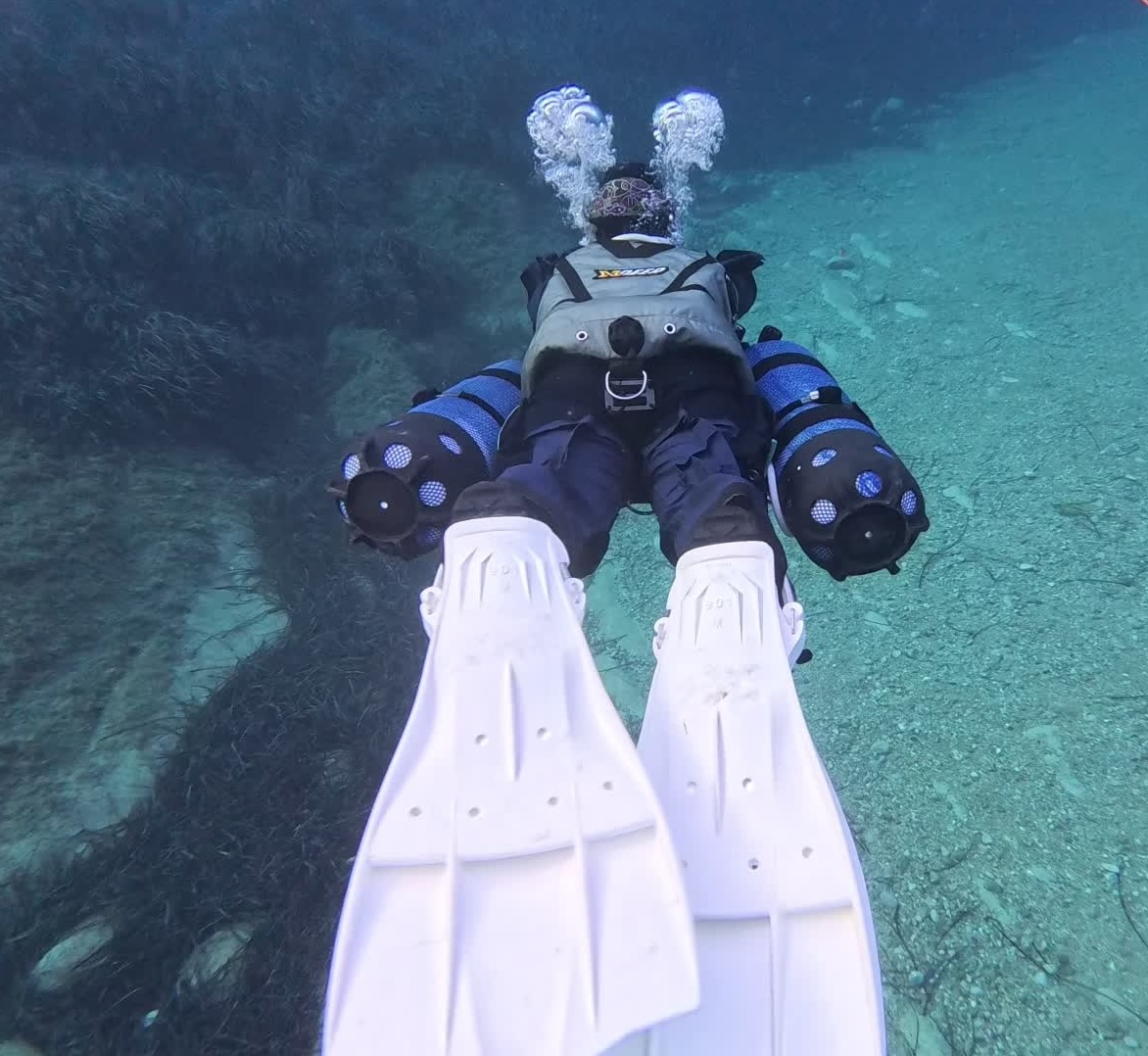
If Day 1 was exciting, Day 2 was humbling.
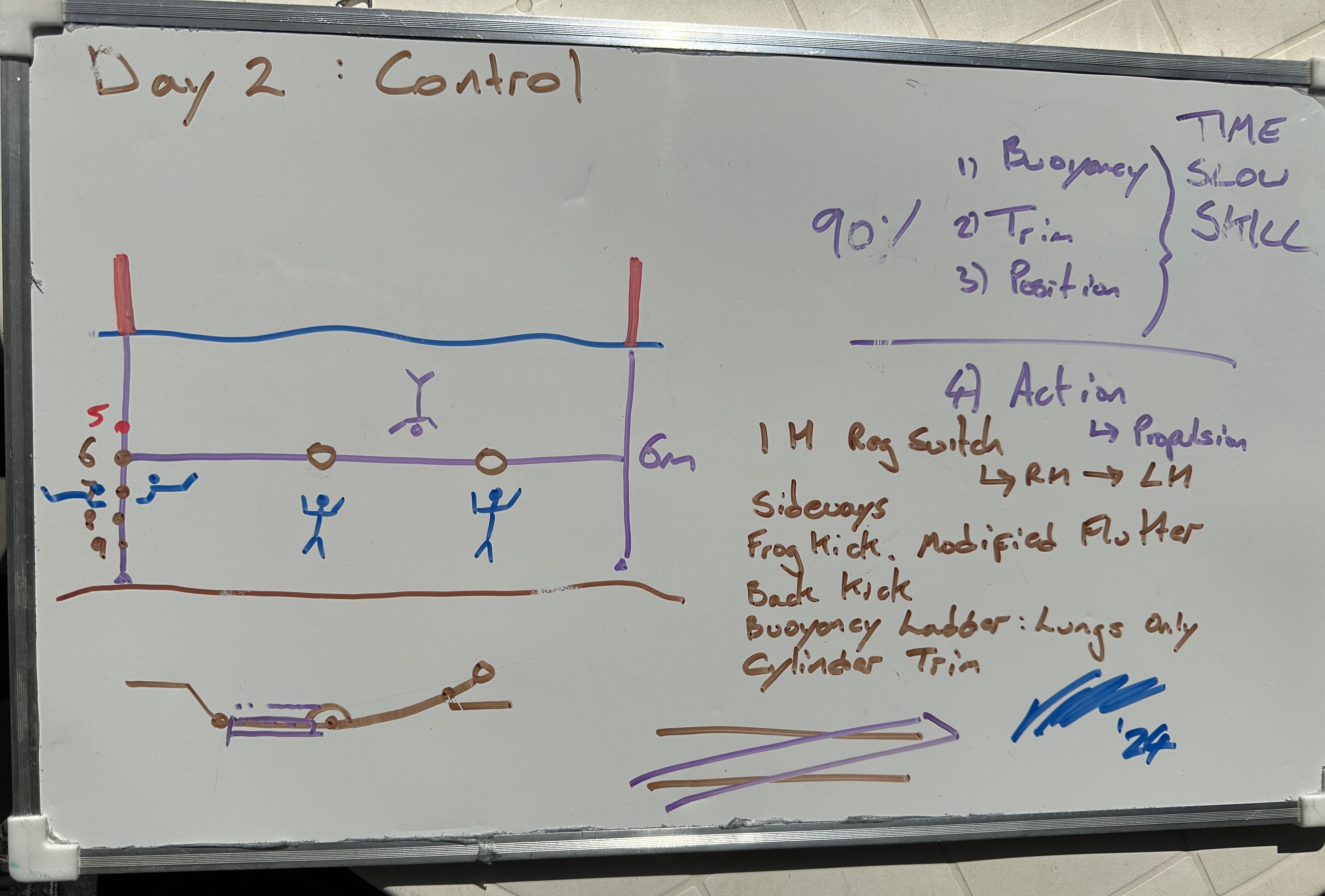
After our first sidemount dive, I had somehow convinced myself that I was starting to understand what I was doing. Day 2 quickly reminded me that understanding something and actually doing it are two very different things.
Most of the day focused on trim, buoyancy, and drysuit control. Skills that I thought I already knew suddenly felt completely different in sidemount.
Looking back at my dive log, my summary of the day was brutally honest:
I was useless today.
Maybe that’s a little harsh, but it certainly felt that way at the time.
All my drysuit skills were pushed right to the edge. Instead of letting the drysuit work for me, I was constantly fighting it. My feet felt heavy, I kept kicking to compensate, and I seemed determined to solve every problem by moving more rather than relaxing and letting the equipment do its job.
As Vas patiently explained during the debriefing, most of the issues weren’t really sidemount problems. They were buoyancy and body-position problems that sidemount simply exposed much more clearly.
One of the biggest lessons was understanding the relationship between the drysuit and the wing. During descent, the drysuit comes first. The wing is there to compensate and fine tune buoyancy, not replace the drysuit altogether.
Then there was the ongoing battle with my feet.
Whenever they started sinking, my instinct was to kick harder. Vas had other ideas. Instead, I needed to learn how to use body position and gas distribution to my advantage. Sometimes it meant lifting my knees, sometimes changing my posture, and sometimes simply being patient enough to let the gas move where it needed to be.
As it turns out, there is a lot less “forcing things to happen” in good diving than I had imagined.
The trim checks were another eye-opener. Empty the drysuit, assume a normal diving position, relax, and let the equipment show what is actually happening. It sounds simple enough until you are underwater and your brain is busy trying to remember about fifty other things at the same time.
The day was challenging and, at times, frustrating. But looking back, it was probably one of the most important days of the course.
Because while Day 1 made me excited about sidemount, Day 2 showed me how much I still had to learn.
And that’s where the real learning began.
Lessons learned
- Inflate the drysuit during descent, then use the wing for fine-tuning buoyancy.
- (Still unsure: is it wrong to use the wing for “comfort air” and the drysuit just for warmth?)
- My feet felt heavy. Solutions Vas gave us:
- Get air into the legs by lifting them higher.
- “Open the door” (relax hips and knees).
- Tilt head down to shift air back toward the shoulders.
- For the opposite issue (air stuck in shoulders):
- Extend arms like Superman.
- Straighten legs.
- Give it time and let the air rise naturally.